






A dense network of structures
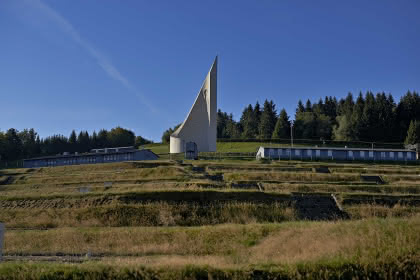
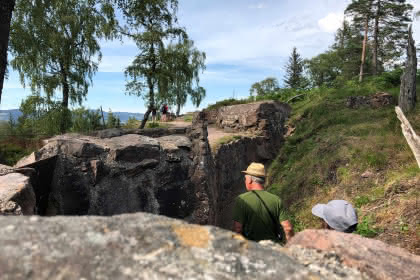
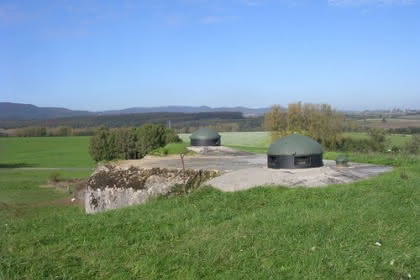
The Maginot Line was a defensive line of structures, differing in size, function and placement depending on the topology of the landscape and the importance of the area to be defended. In the region of Alsace, a number of these structures, now restored and open to visitors, attest to the system's organization. The structures presented in this document will provide a complete picture of what constituted France's defensive lines. Generally, the fortifications consisted of 3 types of construction:
- casemates, housing machine guns, positioned every 1,000 to 1,200 meters,
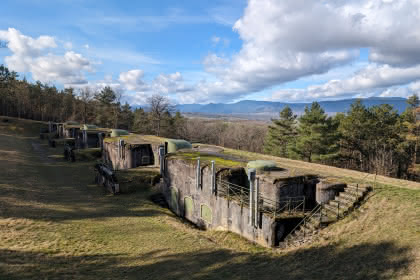
- forts, veritable bastions dominating their positions, housing artillery pieces (long or short) beneath casemates or turrets. These were built 10 to 12 km apart,
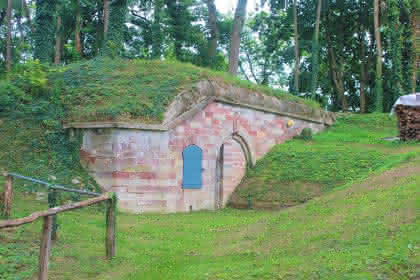
- concrete shelters, at ground level or in dug-out structures, designed to house local reserve troops.
A line of anti-tank devices followed by an inner line of meshed steel wire were the twin obstacles constituting the fortified region's initial barrier, some 5 to 15 km from the border. Beyond them were the forts, veritable underground towns, undetectable from the surface. The forts were organized around combat blocks out of which, spaced some 30 to 50 meters apart, emerged turrets equipped with artillery. Below ground, 30 to 40 meters down, several kilometers of passages formed networks linking areas comprising munitions stores, hospitals and showers, barracks, kitchens, electrical generating areas, repair workshops, rooms for neutralizing air contaminated with gas, command posts, and through which ran strings of trucks carrying munitions. |